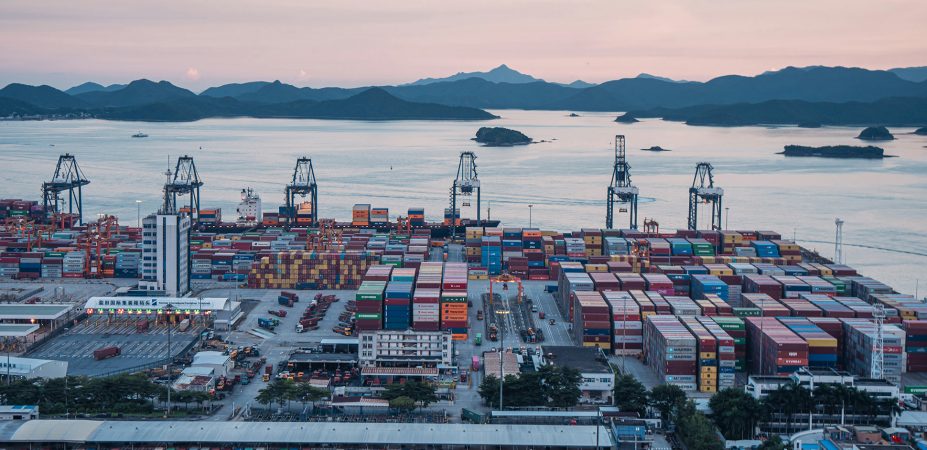
Written by our CEO Bjorn Hojgaard, this article steps past the familiar arguments about intent to examine the economic arithmetic behind China’s industrial rise. Bjorn explores how the country’s high savings, heavy investment and low domestic consumption have reshaped the choices available to industrialising economies beyond China and the West.
There are two increasingly familiar ways of explaining the economic tension between China and the West.
One says that China has simply become better at manufacturing. It has invested in infrastructure, skills, supply chains and industrial capacity while much of the West allowed these things to decay. Chinese companies compete fiercely, execute quickly and operate at enormous scale. If European or American companies cannot compete, that is largely the consequence of choices their own countries made.
The other says that China has built its industrial strength through subsidies, cheap capital, protected markets and persistent overcapacity, and is now exporting that overcapacity to the rest of the world. Factories close, jobs disappear and strategic industries become dependent on China. In the more populist version of this argument, this is deliberate: China is trying to dominate industries and hollow out its competitors.
There is truth in both accounts. But both can also miss something important.
Perhaps we spend too much time trying to establish intent, and too little looking at consequences.
China does not need to intend to deindustrialise another country for that to be the consequence of its economic choices. Equally, tariffs and industrial policies elsewhere do not necessarily mean that other countries intend to contain China’s legitimate economic development.
Much of what is happening can be understood more dispassionately by looking at the underlying arithmetic.
And once we do that, this stops being simply a China-West story. China’s domestic economic choices increasingly affect the choices available to countries everywhere, including many that are themselves trying to industrialise.
Why the model worked
China has built an extraordinary industrial economy. For many years, relatively low household consumption and high national savings were matched by extraordinarily high domestic investment. Those savings did not sit idle. They were recycled through the financial system into roads, ports, power generation, housing, factories, railways and industrial infrastructure.
For a developing economy, much of this made perfect sense. The returns on additional capital were high. More investment created more productive capacity, which created more income and enabled still more investment.
It worked remarkably well.
China industrialised at a speed and scale without precedent. Hundreds of millions of people became more prosperous. Companies around the world gained access to highly efficient supply chains, while consumers benefited from cheaper goods and higher real purchasing power.
For a long time, this was genuinely positive-sum.
But successful economic models can eventually change the conditions that made them successful.
China today has vastly more infrastructure, housing and industrial capacity than it did twenty or thirty years ago. The next motorway, apartment development, steel mill or industrial park cannot automatically produce the same economic return as the first ones did.
Yet the underlying economic structure has changed much more slowly. Household consumption remains a relatively small share of the economy. A large share of national income continues to be saved, and the financial system continues to channel enormous resources towards investment.
The model itself did not suddenly become wrong. Its scale changed.
What the world could readily absorb when China was a much smaller economy becomes much harder to absorb when the same structural imbalance operates through the world’s dominant manufacturing base.
When the arithmetic changes
This is where China’s very high levels of domestic debt become important.
There is sometimes confusion about how an economy can simultaneously save too much and owe so much. There is no contradiction.
If a household earns 100, consumes 60 and deposits the remaining 40 in a bank, it has saved 40. If the bank lends that money to a company or local government, the household has acquired a financial asset and somebody else has acquired a liability. The economy can therefore have very high savings and very high debt at the same time.
For many years, borrowing against those savings financed productive investment. The difficulty begins when additional investment produces progressively lower returns. Debt can continue increasing even though the income generated by the assets it finances does not increase correspondingly.
There is something here reminiscent of Japan around 1990. Japan also reached the end of an extraordinarily successful investment-led industrial development model with high domestic savings, enormous accumulated capital, very high asset prices and a heavily indebted domestic economy.
Because most of the debt was domestic and denominated in its own currency, Japan did not experience the kind of external financial crisis that many other highly indebted economies have suffered. China has many of the same advantages today. Its debts are overwhelmingly domestic, it controls its currency and banking system, and it has considerable ability to move losses around the system.
That makes a Chinese “Lehman moment” less inevitable than is sometimes suggested.
But preventing a financial crisis does not make an unproductive investment productive. Financial losses can be refinanced, transferred or socialised. The underlying economic loss remains.
China therefore faces difficult choices.
It can continue investing despite declining returns, accepting still more debt. It can allow investment and production growth to slow substantially. It can write off or idle excess capacity. It can shift a greater share of national income towards households and allow consumption to become a larger part of the economy.
Or more of what China produces can be absorbed by the rest of the world.
This is where a domestic economic imbalance becomes an international one.
The accounting is fairly unforgiving. If an economy saves more than it invests domestically, the difference must appear as an external surplus. The rest of the world necessarily runs the counterpart.
This says nothing about motivation. It is simply an accounting identity.
And this is also where framing the issue primarily as China versus the West becomes misleading.
China is no longer a relatively small developing economy entering the global manufacturing system. It is the world’s dominant manufacturing economy. At that scale, increasingly large industrial surpluses cannot be absorbed by the rest of the world without affecting productive capacity somewhere.
The same product cannot indefinitely be produced by an expanding Chinese industry and by an unchanged industry elsewhere unless global demand grows sufficiently to accommodate both.
Different countries, different choices
None of this makes Chinese competitiveness somehow illegitimate.
China has genuine advantages in infrastructure, engineering capability, supply-chain density, scale, accumulated know-how and speed of execution. Anyone who has spent time around Chinese manufacturing should be careful about explaining its success simply through subsidies or copying.
But genuine competitiveness and structural overcapacity can exist at the same time.
The consequences also look very different depending on where you sit.
For Europe, Japan or the United States, the question is often whether to allow an existing industrial capability to disappear. Cheap Chinese imports can raise purchasing power and lower costs, but they may also erode industries that governments eventually decide have economic or strategic importance.
For India and other emerging economies with large industrial ambitions, the problem is different. They are still trying to build many of the capabilities China spent decades developing. Cheap Chinese machinery, components and technology can help them industrialise, but competing against China’s enormous existing scale can simultaneously make it harder for their own manufacturers to develop.
For many lower-income countries, including across Africa, the immediate benefits can be even clearer. Affordable Chinese solar panels, telecommunications equipment, vehicles, machinery and manufactured goods can improve infrastructure and living standards. Those gains are real and important.
But there is a longer-term question too. Countries aspiring to move from commodities and low-productivity activities into manufacturing need industries capable of surviving long enough to accumulate skills, scale and productivity. What is good for today’s consumer may not always be good for tomorrow’s industrial development.
Latin America presents yet another version. Countries can benefit enormously from supplying commodities into China’s industrial economy while importing increasingly sophisticated manufactured goods in return. But that relationship can also reinforce a pattern in which they remain commodity exporters rather than moving further up the industrial value chain.
And in Southeast Asia, Chinese investment can itself become part of the solution. Production moves into Vietnam, Indonesia, Malaysia and elsewhere, particularly as Chinese companies respond to trade barriers. These countries can gain investment, jobs, technology and supply chains while simultaneously worrying about competition from Chinese imports.
There is therefore no single “rest of the world” response to China’s industrial rise.
Different countries have different starting points, different ambitions and different trade-offs.
But they share one constraint: none has unlimited capacity or appetite to absorb another country’s industrial surplus if doing so eventually conflicts with its own development or strategic objectives.
The price of resilience
Shipbuilding provides a useful example.
China has become extraordinarily good at building ships. Its shipyards benefit from scale, sophisticated supplier networks, infrastructure, skilled labour and decades of accumulated experience. For an individual shipowner, buying the best ship at the lowest price is entirely rational.
For a country, the calculation may be different.
If buying ships overseas eventually means losing shipyards, equipment manufacturers, skilled trades, naval architects, repair capability and the wider maritime industrial ecosystem, the purchase price of the imported ship did not capture the full strategic cost.
That does not mean every country should build its own ships, nor that protectionism is automatically sensible. Protecting inefficient domestic production can simply institutionalise inefficiency.
But resilience has a price.
The same calculation applies differently in different places. One country may decide that semiconductors justify substantial public support. Another may prioritise pharmaceuticals, batteries, food security, energy equipment or ships. A poorer country may quite rationally conclude that cheap imports today matter far more than creating a domestic industry that may never become globally competitive.
There is no universal answer.
But if a country decides that a productive capability is important enough to retain or develop, somebody must pay for that choice. Consumers may pay higher prices. Taxpayers may fund subsidies. Capital may earn lower returns. Some productive capacity may deliberately be duplicated.
There is no free version of strategic autonomy.
When consequences become intentions
China would understandably like to retain the industrial capability, resilience and growth that its economic model has produced. But that becomes increasingly difficult if domestic demand cannot absorb the resulting production and other countries become less willing to do so.
Countries elsewhere would understandably like to retain the benefits of inexpensive Chinese goods while also preserving or developing productive capabilities of their own. They cannot necessarily have both.
Neither side gets to escape the consequences of its choices.
The danger is what happens next.
China sees tariffs, investment restrictions, local-content rules and industrial subsidies around the world and concludes that others intend to contain China’s legitimate development.
Other countries see successive waves of highly competitive Chinese exports in solar panels, batteries, electric vehicles, steel, chemicals, machinery or ships and conclude that China intends to destroy their industries and establish strategic dominance.
Consequences begin to be interpreted as intentions.
Each then responds rationally to what it sees happening.
China pursues still greater industrial and technological self-sufficiency. Other countries respond with tariffs, subsidies, localisation requirements and restrictions. Chinese companies move production abroad or seek new export markets. Countries in those markets may eventually respond with protections of their own.
Each response becomes additional evidence to somebody else that the original suspicion was correct.
A domestic economic imbalance gradually becomes a geopolitical feedback loop.
And that process need not divide neatly along traditional geopolitical lines. India can have serious strategic differences with China while benefiting enormously from trade with it. Brazil can welcome Chinese investment while protecting domestic industry. African countries can value inexpensive Chinese infrastructure and manufactured goods while wanting industrial development of their own.
The underlying tension is not necessarily China against a geopolitical bloc.
It is what happens when the internal economic choices of one very large economy begin materially constraining the economic choices available to everybody else.
What is sustainable?
This is why the usual question of who is “winning” the economic competition with China is increasingly unhelpful.
The more important question is whether the resulting equilibrium is sustainable.
China’s economic model cannot indefinitely require the rest of the world to absorb ever-increasing industrial capacity if enough countries conclude that doing so undermines capabilities they consider important to their own development, prosperity or security.
Equally, countries elsewhere cannot simultaneously demand the world’s cheapest goods, higher wages, industrial development, strategic independence and the preservation of domestic manufacturing without accepting the costs and trade-offs involved.
Nobody gets everything they want.
This does not mean retreating from global trade or requiring China to become less successful.
Comparative advantage remains real. Trade has contributed enormously to human prosperity. Trying to reproduce every supply chain in every country would consume vast resources and leave most of us poorer.
It means that choices which made sense under one set of circumstances need to be reconsidered when those circumstances change.
China may eventually need to shift more national income towards households and consumption, relying less on investment and external demand.
But that is not simply a matter of encouraging Chinese households to spend more. Increasing their share of national income necessarily reduces the relative claim of other parts of the economy. That is precisely why rebalancing is politically much harder than recognising the need for it.
Other countries face their own choices. They need to decide which productive capabilities genuinely justify paying an insurance premium for resilience or development, rather than treating either free trade or protectionism as an ideology.
Those answers will quite properly be different in India, Germany, Brazil, Indonesia, Kenya or the United States.
All involve costs. There will inevitably be winners and losers within countries and industries. The objective cannot realistically be to eliminate those losses.
The more useful test is whether the system as a whole remains positive-sum: whether its major participants continue to believe they are better off participating in it than trying to overturn it.
Economic policy is ultimately a means rather than an end.
China’s extraordinary development, and the globalisation that accompanied it, have contributed enormously to human flourishing. Hundreds of millions of people in China became more prosperous, while people around the world gained access to products, technologies and infrastructure at costs that would previously have been unimaginable.
That is an extraordinary achievement.
The challenge is how to preserve that positive-sum dynamic as circumstances change, rather than allowing the consequences of yesterday’s successful choices to harden into tomorrow’s zero-sum confrontation.
An economic order is sustainable only while its major participants believe they are better off remaining inside it than trying to change it.
Finding that sustainable equilibrium, one which allows China to continue prospering while leaving sufficient economic space for other societies to prosper and develop capabilities of their own, is ultimately far more important than deciding who won.
If you are interested in knowing more about our services and offerings, including but not limited to ship management, crew management, newbuilding services, and innovative projects onboard our managed fleet, feel free to contact us.