Innovation is not about waiting for the perfect solution — it is about finding the right one, at the right time, for the right challenge. Swapnodeep Mondal, Group Managing Director of Operations and Shared Services, shares some of the latest innovations being evaluated across our fleet.
Smart Air Safe (S.A.S)
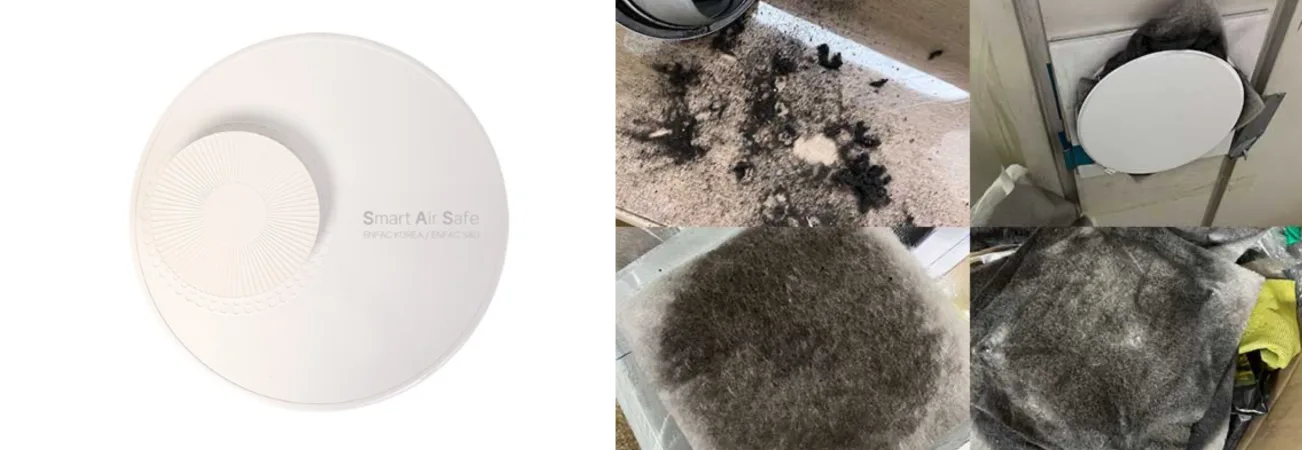
In the enclosed environment of a vessel, the air the crew breathe is only as safe as the system that circulates it. Ship HVAC systems operate on an internal-circulation method, with ventilation ducts across all cabins interconnected to a common supply. If a respiratory infection breaks out in a single cabin, contaminated air can spread through the ductwork to every connected space, risking mass infection. This is not a theoretical concern: inspections of duct diffusers on vessels in service consistently reveal severe contamination.
The Smart Air Safe, developed by ENFAC S&G in South Korea, is a UV-C and HEPA/Carbon filter air sterilisation system designed for direct installation into existing duct cabin units — no structural modifications required. It addresses the root cause of airborne infection spread on board by purifying air before it enters the cabin through a three-step sterilisation process.
Key features:
- Three-step sterilisation: Incoming air passes through a UV-C lamp, Carbon filter, and HEPA filter — neutralising viruses, bacteria, volatile organic compounds (VOCs), and fine dust before it reaches the cabin occupant
- 99.8% reduction in airborne viruses and bacteria, certified by Korea Testing Laboratory (KTL). The UV-C method destroys microbial DNA directly, meaning resistance does not develop over time
- Harmful gas removal: Certified deodorisation of five harmful substances — ammonia, toluene, formaldehyde, acetaldehyde, and acetic acid (KTL and KOTITI certified)
- Smart monitoring: Air quality LED display with optional LCD monitor to check purified air levels per cabin
- Low power / low noise: Less than 50W consumption (equivalent to roughly two light bulbs)
- Easy retrofit: Installs directly into existing duct cabin units with minimal maintenance, making fleet-wide rollout practical
Benefits for our crew and shore staff:
- Breaks the chain of airborne transmission through the HVAC system — the primary and most overlooked infection vector on board
- Improves crew well-being — better respiratory health, sleep quality, and overall living conditions in cabins
- Demonstrates proactive health and safety management beyond minimum regulatory requirements, reinforcing our commitment to crew welfare
- Minimal operational impact — low power draw, low noise, and no structural changes mean the system fits seamlessly into daily vessel operations
Hybrid Anti-Drone System (HADS)
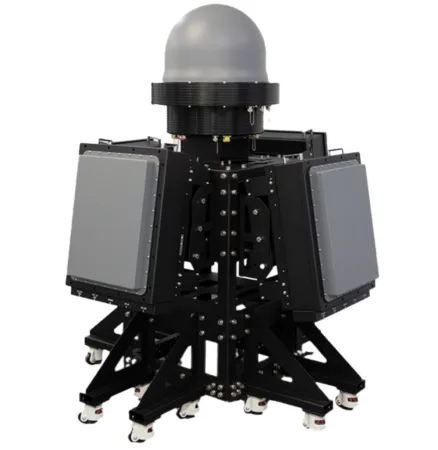
The threat landscape at sea has changed. The possibility of drone and drone-swarm attacks on merchant shipping has escalated significantly in recent years, particularly in the Red Sea, Gulf of Aden, Black Sea, and Strait of Hormuz. These threats are difficult to detect with conventional radar, can carry explosive payloads, and can be launched from considerable distances. The industry’s existing Best Management Practices (BMP) and citadel-based security measures were designed for surface-level threats — not aerial ones. This gap demands a new layer of defence.
The Hybrid Anti-Drone System (HADS), is an integrated drone detection and neutralisation platform that combines AI-powered RF scanning, GNSS spoofing, and multi-sector RF jamming in a single system. It is designed to detect, identify, and neutralise hostile drones before they reach the vessel.
⚠ Legal note: Deployment of GNSS spoofing and RF jamming technology is subject to flag state, coastal state, and port authority regulations. A thorough legal and regulatory review will be conducted with our principals, P&I clubs, and legal advisors before any deployment. Care will also be taken to ensure no interference with the vessel’s own navigation, communication, or safety systems.
Key features:
- AI-powered RF scanner: Detects and identifies drone communication protocols using AI-based algorithms; provides real-time information on drone direction, model, location, altitude, speed, and controller location
- GNSS spoofer: Generates spoofing signals across GPS, GLONASS, GALILEO, and BEIDOU satellite systems to divert hostile drones away from the vessel
- Multi-sector RF jammer: Disrupts the communication link between drone and operator; jamming range over 1.5nm
- Web-based integrated control software: Centralised threat assessment and response interface, suitable for bridge or security operations centre integration; provides a user-friendly environment for non-specialist operators
- Flexible deployment: Available in multiple configurations adaptable for shipboard installation
Benefits for our crew and shore staff:
- Over 2 nautical miles of early warning detection with full 360° coverage — providing critical reaction time for bridge teams and security personnel
- Active neutralisation capability (spoofing + jamming) — a significant step beyond the passive measures currently relied upon in high-risk transits
- Dedicated aerial protection layer that complements armed security teams, evasive manoeuvring, and existing BMP protocols
- Operable by non-specialist personnel via automated modes and an intuitive web interface — no specialist drone-defence training required
Dolphin 3 — Smart Self-Propelled Rescue Device
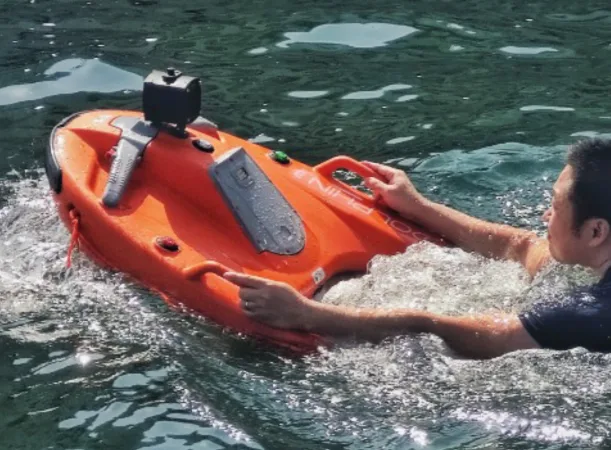
When a person goes overboard from a large merchant vessel, the odds are stacked against them from the first second. The vessel takes considerable time and distance to stop or execute a Williamson turn. Deploying a manned fast rescue boat in heavy weather puts additional crew at risk. And the victim — often exhausted, in shock, or injured — frequently cannot swim to a stationary, drifting life ring. The “last mile” between throwing a lifebuoy and the person actually reaching it has historically been an unresolved gap in our rescue capability.
The Dolphin 3 is a smart, self-propelled water rescue device — a remote-controlled lifebuoy that can be deployed instantly and driven directly to a person in distress, reaching them up to three times faster than even an Olympic-level swimmer. It marks a quantum leap in lifesaving technology by solving the fundamental limitation of traditional life rings: their inability to reach a target accurately and under power.
Following successful testing on one of our RTM vessels, the Dolphin 3 has now been supplied to all 13 vessels in the fleet. Units are placed at designated locations on board, and an inspection and maintenance routine has been incorporated into our Planned Maintenance System (PMS).
Key features:
- Instant activation and auto-righting: Automatically activates the moment it hits the water. The Plus version recovers from a complete capsize within 2 seconds
- Blazing speed and towing power: Maximum speed of 7 m/s. Capable of towing up to 1 ton, enabling it to drag multiple survivors, lifeboats, or debris
- Dual control mastery: Operable via ergonomic remote control or local manual override, giving rescuers zero-compromise flexibility in any emergency
- Real-time video feed: Integrated camera and monitor provide a live 1080p HD video feed of the water surface, allowing the operator to track debris, survivors, or hazards in real time
- Auto-return and low-power recovery: If the remote signal is lost, the device automatically returns to its deployment point via GPS pathing. If the battery drops below 15% (customisable threshold), the auto-return triggers, ensuring the device is always recovered
- Compact and robust: Lightweight, durable construction designed for harsh maritime conditions; stored in a quick-release charging stand to keep the unit at full readiness at all times
Benefits for our crew and shore staff:
- Zero-risk first response — the Master can provide immediate, powered aid to a person overboard without lowering the fast rescue boat in marginal weather, eliminating the risk to additional crew
- Drastically reduced time to contact — reaches the victim far faster than vessel manoeuvring or a drifting lifebuoy, directly addressing the survival window
- Any crew member can operate it — intuitive remote control and instant deployment require minimal training
- Real-time situational awareness — the live video feed gives the bridge team eyes on the water surface, improving rescue coordination and decision-making
- Fail-safe recovery — auto-return on signal loss or low battery means the device is not lost even in the most challenging conditions
These three innovations represent our continued commitment to staying ahead of the curve — whether the challenge is airborne infection in crew quarters, aerial threats in high-risk transit zones, or the critical seconds after a person goes overboard. Some are in the early stages of evaluation; one is already saving capability across an entire fleet segment. Together, we continue to redefine what is possible in maritime operations.
If you are interested in knowing more about our services and offerings, including but not limited to ship management, crew management, newbuilding services, and innovative projects onboard our managed fleet, feel free to contact us.